Medically reviewed by Dr Sin Yong · Last reviewed · 28 min read · Doctor-performed, never delegated · Jump to questions
Dr Sin Yong · MBBS (NUS) · MRCS (Edin) · MSc Aesthetic Medicine with Distinction (Queen Mary, London) · MSc Practical Dermatology (Cardiff) · International KOL
A comprehensive, multi-modal approach to hair restoration — combining medical therapy, nutritional support, laser stimulation, growth factors and exosome treatment, so that each contributing mechanism is addressed rather than relying on one.
International KOL for 14+ device brandsShared his clinical expertise with 500+ doctors across AsiaMBBS (NUS) · MRCS (Edinburgh) · MSc with Distinction (Queen Mary, London) · MSc (Cardiff)Every treatment personally performed — never delegated
About This Treatment
Hair loss treatment in Singapore starts with identifying the kind of hair loss — pattern thinning, diffuse shedding or patchy autoimmune loss — because each is treated differently. For androgenetic thinning, prescription medicines such as finasteride and minoxidil form the foundation, with hair growth laser and regenerative scalp treatment layered around them, and transplant referral where follicles are lost.
Also called: pattern hair loss, androgenetic alopecia, 脱发, 雄激素性脱发, AGA
Key takeaways
Hair loss treatment starts by identifying the type: pattern thinning, diffuse shedding or patchy autoimmune loss, each treated differently.
For androgenetic thinning, prescription medicines such as finasteride and minoxidil form the foundation; other treatments are layered around them.
Suitability depends on trichoscopy, blood tests and whether surviving follicles remain; a follicle already lost cannot be regrown.
Hair growth laser, nutritional support and regenerative scalp treatments are adjuncts, not stand-alone answers; transplant referral is considered where follicles are lost.
Dr Sin Yong, an aesthetic physician, assesses and plans every programme personally; hair transplant surgery is referred on.
Hair Loss Treatment Singapore — A Multi-Modal Programme
Hair loss from androgenetic alopecia and other causes is a progressive condition with multiple contributing mechanisms — DHT-driven follicle miniaturisation, nutritional deficiency, scalp inflammation, reduced follicle blood supply, and stem cell dormancy. No single treatment addresses all of these simultaneously.
Dr Sin Yong's hair restoration programme is built on the understanding that strong outcomes come from addressing all contributing factors together — medical therapy as the foundation, laser stimulation to support follicle activity, growth factors and exosomes to deliver regenerative signals, and nutritional support to provide the building blocks for healthy hair growth.
Every hair loss treatment in Singapore requires an individual approach — each programme is designed based on a thorough assessment of the patient's hair loss pattern, stage, contributing factors and treatment history. This is why healthy hair loss treatment outcomes in Singapore come from programmes that are built around the patient, not around a fixed protocol.
Assessment comes before any device or injectable is chosen.
The Complete Hair Restoration Programme
01
Medical Foundation — Prescription Medical Therapy
Oral DHT-pathway therapy targets the primary driver of androgenetic alopecia — follicle miniaturisation from androgen sensitivity. Topical or oral vasodilator therapy prolongs the anagen phase and increases follicle size. The two act on different mechanisms, which is why they are often prescribed together. This medical foundation is established before other treatments are layered on. Before commencing treatment, patients are recommended to have serum zinc, iron and folate levels checked in their routine health screening — deficiencies in these micronutrients are a correctable and often overlooked driver of hair loss.
02
Nutritional Support — Nourkin with TricoVerde®
Nourkin provides the nutritional building blocks for healthy hair shaft formation — millet seed oil, soy isoflavones, L-cystine, biotin, zinc, selenium and B-complex vitamins through the TricoVerde® formulation. Used as nutritional support in telogen effluvium and postpartum shedding, and as a daily complement to medical therapy.
03
H2LT — Hair Hyperstimulation Laser Therapy
Dr Sin Yong's proprietary laser protocol uses calibrated energy to stimulate the dermal papilla — intended to encourage resting follicles from telogen back into anagen. The course is planned individually at consultation. No medication is involved, which suits patients who prefer a drug-free layer alongside their programme.
Topically applied exosome preparations are proposed to deliver growth factors (VEGF, PDGF, EGF, IGF-1) directly into the scalp, stimulating follicle vascularisation and activity. Synergistic with H2LT — the laser activates follicles while growth factors provide the nutritional regenerative signal.
05
Regenera Activa — Autologous Micrografting for Hair Loss
Regenera Activa is a regenerative hair loss treatment that uses the patient’s own tissue. A small scalp sample is taken from an area of healthy follicles and processed on-site to prepare an autologous micrograft rich in regenerative cellular material, which is then reintroduced into the thinning areas of the scalp. Because it draws on the patient’s own biological material, there is no synthetic drug involved in the micrograft itself. Regenera Activa is used as part of Dr Sin Yong’s multi-modal hair programme, complementing the medical foundation and in-clinic regenerative treatments rather than replacing them. Suitability is assessed individually at consultation, with trichoscopy and blood tests to confirm the underlying cause of hair loss before treatment.
06
Derive Serum — Daily Exosome Scalp Treatment
Plant stem cell-derived exosome topical treatment applied at home daily — providing continuous regenerative signalling between clinic sessions. Reduces scalp inflammation, promotes follicle activity and complements all in-clinic treatments.
07
Assessment & Monitoring
All hair restoration programmes begin with trichoscopy (scalp microscopy) to assess follicle health and hair density, and blood tests to identify contributing hormonal or nutritional factors. Progress is monitored with standardised photography and trichoscopy at each visit.
“No treatment regrows a dead follicle. The work is saving the ones still alive.”
— Dr Sin Yong
Know Your Hair Loss Type
Do not let your hair fall without knowing this!
Androgenetic thinning, patchy alopecia areata and stress-shedding are three different diseases with three different treatments. Products bought for the wrong type cost months of follicle miniaturisation you do not get back. Typing comes first — see androgenetic alopecia and alopecia areata.
How do the hair restoration modalities compare?
Medications (topical & oral)
Regenera Activa micrografts
Exosome scalp therapy
H2LT laser + LLLT
What it does
Slows the hormonal miniaturisation driving androgenetic loss
Autologous micrografts deliver progenitor cells to thinning zones
Regenerative signalling to support follicle cycling
H2LT laser stimulation of scalp circulation and follicle activity — followed immediately by about 20 minutes of LLLT over the treated areas
Typical fit
Early-to-moderate androgenetic thinning; the foundation layer
Established thinning with surviving follicles
Adjunct across programme stages
Adjunct; no-needle preference
What it cannot do
Regrow follicles already lost
Replace typing — wrong-type cases waste the graft
Stand alone as a cure
Stand alone in advanced loss
Format
Daily, ongoing
Single session per cycle
Sessions in programme
Sessions in programme; ~20 min LLLT each visit
This is why the programme is multi-modal: each layer covers what the others cannot — and the combination is chosen after typing, not before.
Which grade is your hair loss?
Hair loss is staged before it is treated — the grade decides how intensive the programme needs to be, and earlier grades hold far more salvageable follicles. Find your pattern below, then confirm it under the consultation scope.
Female pattern hair loss
Ludwig Scale
Grade I
Early widening of the central parting; density loss visible mainly on close inspection
Grade II
Pronounced thinning over the crown — the parting widens and scalp shows through under light
Grade III
Diffuse crown loss with clearly visible scalp; the frontal hairline is typically preserved
Androgenetic alopecia (male pattern)
Norwood–Hamilton Scale
I–II
Minimal change to mild frontotemporal recession — the adult hairline forming
III / III vertex
First clinically significant recession; the vertex variant adds crown thinning
IV–V
Deeper recession and an enlarging crown patch, separated by a thinning bridge
VI–VII
The bridge is lost — frontal and crown loss merge toward the horseshoe pattern
Alopecia areata
SALT Score
S1
Less than 25% of scalp involved — often one or a few discrete patches
S2–S3
25–74% involvement — patches multiplying or coalescing
S4–S5
75–100% involvement — approaching or reaching alopecia totalis
Beyond scalp
Loss of body hair defines alopecia universalis; eyebrow and lash involvement is graded separately
Each pattern is a different disease: female pattern and androgenetic loss are hormonal and gradual, while alopecia areata is autoimmune and can move fast — see the androgenetic alopecia and alopecia areata guides. Your grade is confirmed at assessment, not guessed from the mirror.
“A miniaturised follicle can recover; a follicle that has vanished cannot.”
— Dr Sin Yong
A professional hair loss treatment in Singapore pairs diagnosis with a plan: energy-based scalp treatment for hair loss (H2LT followed by LLLT), guideline-anchored medications as the anti hair loss treatment backbone, and hair loss prevention habits that protect what regrows.
Dr Sin Yong Recommendations on Hair Restoration
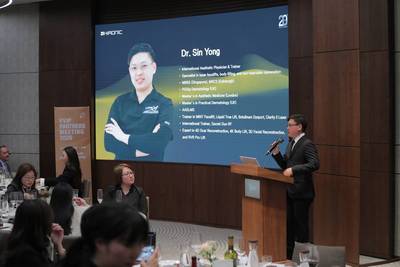
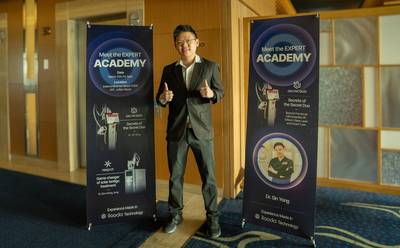
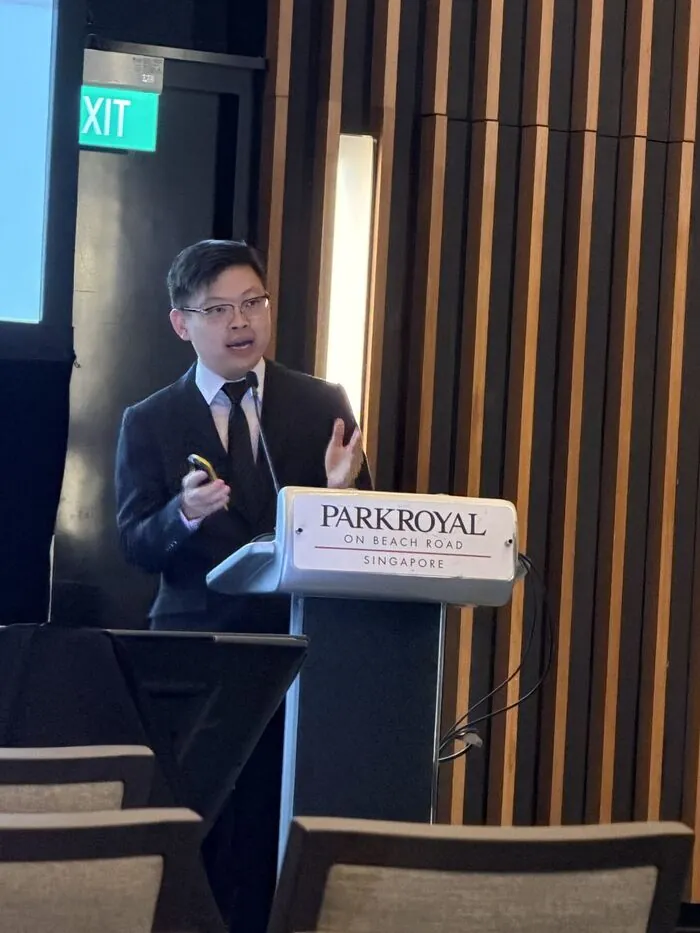
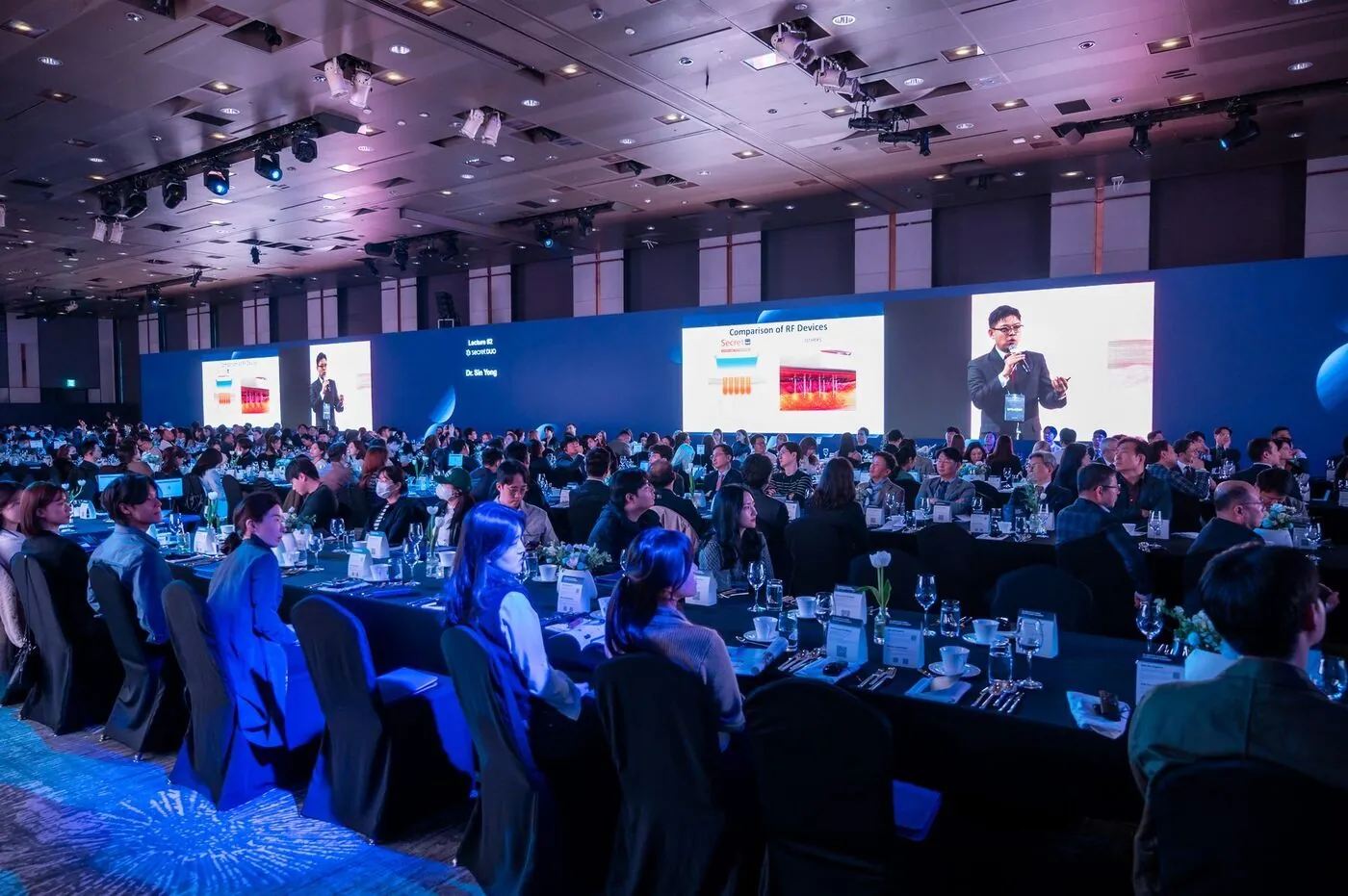
The physician who assesses your scalp is the one device manufacturers invite to share his clinical expertise with other doctors — across Seoul, Bangkok, Dubai and Singapore.
Invited speaker — HIRONIC, Seoul 2026“Meet the Expert” Academy — ILOODA, Seoul 2024Conference speaker — SAM Conference 2026, SingaporeMain-stage lecture — CLASSYS Global Customer Summit, Seoul 2025
Prefer Not to Use WhatsApp?
Leave your name, mobile number and email and the clinic will contact you directly. No obligation.
Thank you — your enquiry has been received. The clinic will contact you during opening hours (Mon–Fri 10am–8pm, Sat 11am–3pm).
Prefer a preliminary view first? You can also WhatsApp a photo of the area for Dr Sin Yong to review before you decide on a visit.
What does finasteride do for hair loss, and is topical finasteride different?
Finasteride is a prescription medicine that blocks type II 5-alpha reductase, the enzyme that converts testosterone into dihydrotestosterone (DHT) at the scalp. DHT is the hormone that drives follicle miniaturisation in androgenetic alopecia, so finasteride works on the cause of pattern thinning rather than on the hair shaft. It is the oral DHT-pathway therapy described in the medical foundation above, named here for education only: whether it suits you is a prescribing decision made after assessment.
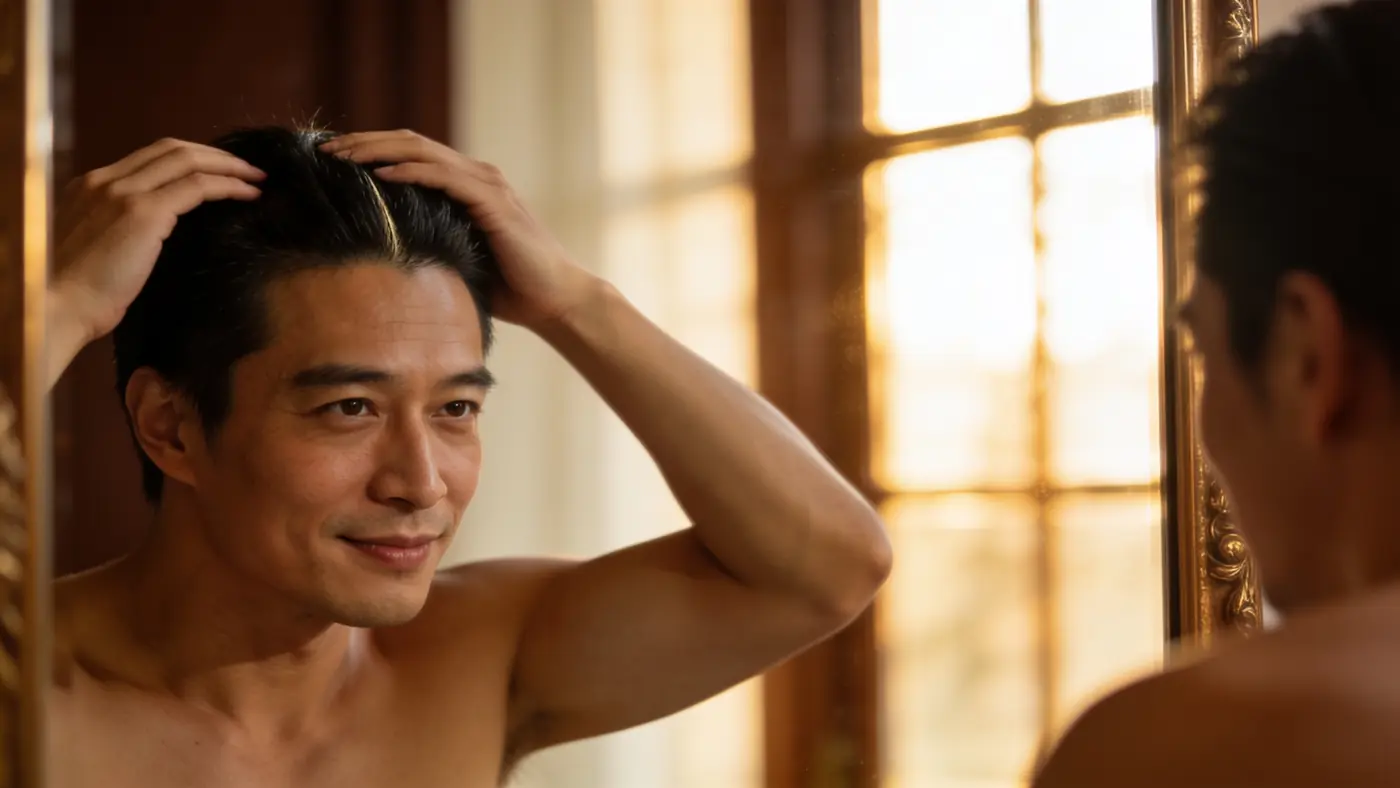
Illustrative image — not a patient.
In Singapore, finasteride is prescribed by a doctor after a history and examination. Side effects discussed before starting include changes in libido, erection or ejaculation in a minority of men, reported mood changes, and a lowering of PSA readings that matters for prostate screening. Women who are or may become pregnant should not handle crushed or broken tablets.
Topical finasteride is applied to the scalp and is designed to act locally with lower systemic exposure than the tablet. Some of it is still absorbed, so the same precautions are considered. It is an alternative route, not a different medicine.
Is oral minoxidil used for hair loss in Singapore?
Yes — low-dose oral minoxidil is prescribed for hair loss in Singapore, but it is an off-label use of a medicine originally developed as a tablet for high blood pressure. Topical minoxidil has a long history in pattern hair loss; the oral form is a newer option for patients who find daily scalp application difficult or irritating. Both work by prolonging the growth phase of the hair cycle and enlarging miniaturised follicles, which is the vasodilator therapy described in the medical foundation above.
Because it acts on blood vessels throughout the body, oral minoxidil is a prescribing decision rather than a supplement. Before it is considered, blood pressure, heart history and current medicines are reviewed. Effects discussed in advance include unwanted facial or body hair, ankle swelling from fluid retention, a faster heartbeat and light-headedness. A temporary increase in shedding can occur early on as follicles reset their cycle.
Oral minoxidil does not block DHT, so in androgenetic alopecia it is commonly considered alongside DHT-pathway therapy rather than instead of it. It is named here for education only.
Does a hair growth laser work?
A hair growth laser can support follicle activity, but it is an adjunct, not a standalone treatment. Low-level laser therapy — photobiomodulation in the red spectrum — acts on cells in the follicle rather than heating them, and clinical trials have studied it in androgenetic alopecia as an addition to medical therapy. It does not block DHT and it cannot revive a follicle that has already gone.
At this practice, laser hair growth treatment takes the form of H2LT: a calibrated laser stimulation of scalp circulation and follicle activity, followed immediately by around 20 minutes of low-level laser over the treated areas. It involves no medication, which suits patients who want a drug-free layer alongside their programme.
What decides whether laser is worth adding is the diagnosis underneath. Laser on a scalp with untreated pattern loss treats the symptom while miniaturisation continues; laser on diffuse shedding misses a trigger that blood tests would find. Hair growth laser is also the opposite of laser hair removal: one is set to stimulate the follicle, the other to disable it.
When is a hair transplant considered?
A hair transplant is considered when follicles in a zone have been lost and no stimulation can revive them — a smooth, shine-bare hairline or crown with an adequate donor area. It relocates follicles from the back and sides of the scalp, which are genetically resistant to DHT, into the thinning area. FUE harvests individual follicular units; FUT removes a strip of donor scalp that is then divided into grafts.
A transplant redistributes hair; it does not stop hair loss. The native hair around the grafts keeps miniaturising unless the underlying androgenetic alopecia is treated, which is why medical therapy usually continues afterwards. Diffuse female thinning is often less suited to transplantation, because the donor area may thin as well.
Dr Sin Yong does not perform hair transplants. Patients for whom relocation is the realistic tool are told so plainly and referred to an appropriate hair transplant surgical team. Whether the procedure is done in Singapore or abroad, the questions are the same: who performs the harvesting and placement, what the plan is for the native hair, and who follows you up afterwards.
Can a receding hairline be treated without a transplant?
A receding hairline can often be slowed or held without surgery when the follicles at the front are miniaturising rather than gone. Where the hairline has been bare and smooth for some time, medicine and laser cannot rebuild it.
The first step is to establish what kind of recession it is. In many men the hairline rises slightly from its adolescent position to a mature adult line, which is normal and does not keep progressing. Recession that continues to deepen at the temples is usually androgenetic alopecia, graded on the Norwood scale above. Traction alopecia from tight hairstyles can also move the hairline back, and less commonly frontal fibrosing alopecia, a scarring condition seen more often in women, does the same; that one needs dermatological assessment, because follicles lost to scarring do not return.
For androgenetic recession, the medical foundation described on this page is aimed at keeping the hair that remains, with hair growth laser as an adjunct. Medical therapy is generally better at preserving a hairline than rebuilding one, which is why recession assessed early leaves more options. Where the front has been lost and the donor area is adequate, the realistic tool is relocation, and patients are referred to a hair transplant surgical team.
Illustrative image — not a patient.
What happens at a hair loss consultation?
A hair loss consultation establishes which type of hair loss you have before any treatment is chosen. It begins with a history: when the loss started, whether it is shedding from all over or thinning in a pattern, recent illness, childbirth, weight loss or stress, diet, current medicines, hairstyles, and any family history of thinning.
The scalp is then examined, including trichoscopy, a magnified view of the scalp that shows miniaturised hairs, broken hairs, scaling and signs of inflammation or scarring. The pattern is graded on the Norwood or Ludwig scale, or with the SALT score for patchy loss, and standardised photographs are taken as a baseline for review.
Blood tests are arranged where they can change the plan, particularly in diffuse shedding and in women. Commonly checked markers include iron stores, zinc and folate, with thyroid function and hormonal tests added according to the history. A correctable deficiency or thyroid problem treated with a hair product alone leaves the trigger in place.
Only then is a plan proposed. It may be prescription medicine with adjunct treatments, review of a shed that is likely to settle, referral to a dermatologist for a scarring condition, or referral to a transplant team where follicles have already been lost.
Hair loss by cause: how each type is approached
Type of hair loss
What it looks like
Usual drivers
How it is approached
When it is referred
Pattern hair loss (androgenetic alopecia)
Gradual thinning at the temples and crown in men, or a widening parting in women
Genetic sensitivity of scalp follicles to DHT
Prescription medicine as the foundation, with laser and regenerative scalp treatment as adjuncts
Where follicles in a zone are lost and the donor area is adequate, for a transplant opinion
Diffuse shedding (telogen effluvium)
Increased hair fall from all over the scalp, often a few months after a trigger
Fever, illness, childbirth, crash dieting, stress, iron deficiency or thyroid disease
Finding and correcting the trigger with history and blood tests, then review, since many sheds settle once the trigger passes
Shedding that persists, or that unmasks underlying pattern loss
Patchy loss (alopecia areata)
Smooth, round patches, sometimes with eyebrow, lash or beard involvement
Autoimmune attack on the hair follicle
Medical treatment chosen by extent, graded with the SALT score
Extensive or rapidly spreading patches, to a dermatologist
Traction alopecia
Thinning along the hairline and temples, sometimes with a fringe of short hairs
Repeated pulling from tight ponytails, buns, braids or extensions
Removing the tension first, with medical support for the follicles that remain
Long-standing loss where scarring is suspected
Scarring alopecia
Patches where the scalp looks smooth or shiny and follicle openings are lost, often with itch or tenderness
Inflammatory conditions such as frontal fibrosing alopecia or lichen planopilaris
Prompt diagnosis so that progression can be halted
Referred to a dermatologist, often for a scalp biopsy
Who it suits, who should wait, who is referred on
Tends to suit
Early to moderate pattern thinning with follicles still present
Increased shedding after a clear trigger, once the cause is confirmed
People willing to follow a long-term programme with planned reviews
Those who want a medical, assessment-led plan before any device
Better to wait
Pregnancy or breastfeeding, when prescription options are limited
Active scalp infection or inflammation until it is treated
Unconfirmed cause of hair loss, until blood tests and trichoscopy are done
Referred on
Advanced loss with few surviving follicles, for hair transplant assessment
Suspected scarring alopecia or other scalp disease, for dermatology assessment
Who should not have this treatment
Pregnancy, planning pregnancy or breastfeeding (for prescription anti-androgen therapy)
Known hypersensitivity to a prescribed medicine or product component
Active scalp infection, open wounds or untreated inflammatory scalp disease
Significant liver disease or uncontrolled heart or blood pressure problems (for certain oral medicines)
Bleeding disorders or blood-thinning medicines, which are reviewed before any scalp procedure
Unrealistic expectations of regrowth where follicles are no longer active
People with advanced loss and few surviving follicles, or with scarring or autoimmune patchy loss that has not been typed, tend to respond poorly, and this programme is the wrong tool for them until the cause is established.
Risks, side effects and when to call
Expected effects depend on the treatment. Oral and topical medicines can cause side effects that are reviewed before starting, including scalp irritation with topical products and, in a minority of men, sexual side effects with oral anti-androgen therapy. Shedding can appear to increase early in a programme before settling. Scalp procedures can cause tenderness, redness, swelling or bruising at the treated points. Infection and allergic reactions are uncommon but possible. No treatment can promise regrowth, and response varies between people, which is why progress is reviewed with photographs and trichoscopy at planned visits.
Contact the clinic the same day if
Spreading redness, warmth or pus on the scalp
Increasing pain or swelling after a procedure
Rash, itching or swelling of the face or lips after a medicine
Mood changes, breast tenderness or sexual side effects on oral therapy
Sudden patchy loss or a scalp area that looks scarred
Keep the scalp clean and avoid scratching or picking at treated areas
Avoid hot showers, saunas and vigorous exercise if the scalp feels tender
First week
Use the scalp products you have been advised to use, and avoid others
Continue prescribed medicines as directed and note any side effects
Sun
Cover the scalp or use a suitable sun protection product on exposed areas
Skincare
Pause irritating scalp actives and harsh styling treatments until advised otherwise
When to call
Spreading redness, warmth, pus or increasing pain on the scalp
Rash, facial swelling or any side effect from a prescribed medicine
Before you book
List all medicines and supplements, including any hormonal treatment, isotretinoin or blood thinners
Tell us if you are pregnant, planning pregnancy or breastfeeding
Bring recent blood test results for iron, ferritin, thyroid, zinc or folate if you have them
Pause strong scalp actives and avoid heavy sun exposure on the scalp before a procedure, unless advised otherwise
Bring photographs of your hairline and crown from earlier years, and a list of products or treatments already tried
What determines the fee
The fee for hair loss treatment depends on the type and stage of hair loss, which treatments make up your programme (medication, laser, in-clinic regenerative treatment, nutritional support), how many areas of the scalp are involved, and whether a micrograft procedure is advised. Investigations such as trichoscopy and blood tests are part of the assessment. A written quote is given at consultation after assessment, and the consultation also decides whether treatment is advised at all.
“Any hair loss product works for any type of hair loss.”
Pattern thinning, stress shedding and patchy alopecia areata are different conditions that need different plans, so the type must be confirmed first.
“A hair growth laser is the same as laser hair removal.”
They use different energy settings for opposite purposes: one stimulates follicle activity, the other is designed to disable hair follicles.
Frequently Asked Questions
Which hair restoration treatment is most important?+
The medical foundation — oral and topical therapy — is the evidence-based foundation of treatment for androgenetic alopecia. No laser or growth factor treatment can compensate for absence of medical therapy in DHT-driven hair loss. Dr Sin Yong always establishes the medical foundation first.
How long before I see results?+
Hair grows slowly and follicles cycle over months, so change is assessed over months rather than weeks, and response varies between individuals. Progress is tracked with standardised photography and trichoscopy at review visits rather than judged in the mirror.
Is hair restoration suitable for women?+
Yes — female pattern hair loss, telogen effluvium and other causes of female hair loss can each be managed with appropriately selected treatments. Some oral options are unsuitable for premenopausal women, who instead benefit from alternative hormonal and topical routes, Nourkin, H2LT, growth factors and Derive Serum.
Is hair transplant needed?+
Hair transplantation is considered where follicles in a zone have been lost and stimulation can no longer revive them, and where the donor area is adequate. Those patients are told so plainly and referred to an appropriate surgical team. Many scalps that are assessed and stabilised early keep enough of their own hair that surgery can be deferred.
What is Derive Serum?+
An exosome-based topical scalp treatment applied daily at home. Plant stem cell-derived exosomes deliver concentrated growth factors and regenerative signals directly to hair follicles — reducing scalp inflammation and supporting follicle activity between clinic sessions.
What is Regenera Activa?+
Regenera Activa is a regenerative hair loss treatment using the patient’s own tissue. A small scalp sample is processed on-site into an autologous micrograft containing regenerative cellular material, which is reintroduced into thinning areas of the scalp. Dr Sin Yong offers it as one component of the multi-modal hair programme; suitability is assessed individually at consultation.
Is finasteride available without a prescription in Singapore?+
No. Finasteride is a prescription medicine in Singapore and is prescribed by a doctor after assessment, because the decision depends on the type of hair loss, your medical history and the side effects that need discussing first. It is named here for education only.
What should I look for in a hair clinic in Singapore?+
Look for a doctor-led diagnosis before any product or package is discussed: a scalp examination with trichoscopy, blood tests where shedding or female thinning is involved, and a clear statement of which type of hair loss you have. Prescription medicines can only be prescribed by a doctor, and a single treatment offered for every scalp skips the diagnosis.
Is a hair growth laser the same as laser hair removal?+
No. Laser hair removal delivers heat to disable the follicle; hair growth laser uses calibrated, low-level energy intended to stimulate it. The two can use light in overlapping parts of the spectrum, but the settings and the goal are opposite.
What happens if I stop hair loss treatment?+
In androgenetic alopecia, the hormonal process continues whether or not it is treated, so stopping medical therapy generally allows miniaturisation to resume and hair gained or kept is gradually lost. Shedding triggered by a temporary cause, such as illness or childbirth, behaves differently once the trigger has passed. Any change to a prescription should be discussed with your doctor before stopping.
What is the difference between FUE and FUT hair transplant?+
Both move DHT-resistant follicles from the back and sides of the scalp to the thinning area; they differ in how the donor hair is taken. FUE removes individual follicular units, leaving small scattered dot scars, and the donor area is usually clipped short. FUT removes a strip of scalp that is divided into grafts and closed, leaving a fine linear scar that is normally covered by the hair above it. Which suits you depends on donor density, how many grafts are needed and how short you wear your hair, and the decision is made by the surgical team. Dr Sin Yong does not perform hair transplants.
What determines the cost of a hair transplant in Singapore?+
The cost is set by the surgical team after their own examination, and it mainly follows the size of the area, the number of grafts needed, the technique and whether the work is staged. One part is often overlooked: the native hair around the grafts keeps thinning unless androgenetic alopecia is treated, so continuing medical therapy is part of the overall plan. Dr Sin Yong does not perform transplants or quote for them; his role is to assess whether relocation is the right tool and to manage the medical side.
Can stress cause hair loss?+
Yes. A significant physical or emotional stress can push many follicles into their resting phase at once, causing diffuse shedding a few months later, known as telogen effluvium. It usually settles once the stress has passed, but it can also unmask pattern thinning that was already developing, so persistent shedding is assessed rather than put down to stress alone.
Does hair grow back after traction alopecia?+
Often, if the pulling stops early. In the early stage the follicles are inflamed but alive, and hair can return once tight styles, extensions or heavy buns are stopped. After years of traction the follicles can scar and stop producing hair, which is why loosening the style comes before any treatment and why long-standing traction loss is examined closely.
How much does hair loss treatment cost in Singapore?+
The fee depends on the type and stage of hair loss, which treatments are combined, the scalp area involved and whether a micrograft procedure is advised. Assessment tests are part of the process. A written quote is given at consultation after examination, and the consultation decides whether treatment is advised at all. Figures are not quoted in advance because each programme is built around the individual.
Is hair loss treatment worth it?+
It tends to suit people with early to moderate androgenetic thinning who still have living follicles and will follow a programme with regular reviews. It is a poorer fit where follicles are already lost, where the cause has not been identified, or where someone wants a single quick fix. Typing the hair loss first shows which group you are in.
How long does hair loss treatment last?+
No duration is promised. Pattern hair loss is progressive, so benefit from medical therapy generally depends on continuing it, while laser and regenerative treatments are adjuncts reviewed over time. Longevity is influenced by the type of loss, age, genetics, adherence and contributing factors such as nutrition. Review timing is set at consultation and adjusted as the response becomes clear.
What are the disadvantages of hair loss treatment?+
Medical therapy is usually long term and can carry side effects that need review. Shedding may appear to increase early on. Results vary, and treatment cannot regrow follicles already lost. Laser and in-clinic treatments add visits and cost, and no single option addresses every driver of hair loss. Where loss is advanced, transplant assessment may be the more suitable route.
SY
Dr Sin Yong
MBBS (NUS, Singapore) · MRCS (Royal College of Surgeons, Edinburgh) MSc Practical Dermatology (University of Cardiff, UK) · MSc Aesthetic Medicine with Distinction (Queen Mary University of London) Graduate Diploma in Sports Medicine (Nanyang Technological University)
International Key Opinion Leader — CLASSYS | HIRONIC | DEKA | ALMA | FOTONA | LUTRONIC
For patients exploring all options, hair transplant in Singapore is one surgical route, while Dr Sin Yong focuses on non-surgical hair restoration and regrowth protocols first.
Sudden shedding, gradual thinning and patchy loss each lead to a different work-up: telogen effluvium, pattern loss staging or dermatology referral.
Hair loss in Singapore — sorting the cause before choosing a hair growth treatment
At a glance
Classification used
Norwood I–VII in men; Ludwig I–III in women — the grade is established before any plan
Common pattern type
Androgenetic alopecia: follicular miniaturisation driven by dihydrotestosterone at genetically susceptible follicles
Shedding vs pattern
Telogen effluvium is diffuse and follows a trigger; pattern loss is regional and progressive. They are managed differently
Scalp as a separate axis
Seborrhoeic dermatitis and sebum load are assessed independently of the hair loss pattern
Donor area
Occipital and lateral scalp hair is genetically resistant to DHT, which is what makes relocation viable
Low-level laser
Photobiomodulation in the red spectrum, typically 650–680 nm, applied to the scalp
Hair loss Singapore covers several conditions with one appearance. A hair growth treatment chosen before the pattern is graded is a guess, and the commonest error is treating diffuse shedding as though it were pattern loss.
“Relocating hair does not stop the hair loss that made the transplant necessary. Restoration comes before relocation, or you are transplanting into a receding field.”
Dr Sin YongOn hair restoration sequencing
Oily scalp hair loss Singapore is a genuinely common presentation in this climate, and the scalp is assessed as its own axis: seborrhoeic dermatitis and heavy sebum can coexist with pattern loss without causing it, and a scalp treatment for hair loss that ignores one of the two will underperform. Hair growth laser — low-level laser therapy — is one input among several rather than a standalone answer, and sits alongside topical and oral management, injectables and, where appropriate, hair transplantation.
Medically reviewed by Dr Sin Yong, MBBS (NUS), MRCS (Edinburgh) · Last updated 5 September 2026 · Editorial policy
Patient guide (PDF):Hair loss: what to check first — a printable summary of this page, medically reviewed by Dr Sin Yong. General information, not a substitute for assessment.
Hair Loss Treatment Singapore — Hair loss treatment in Singapore: causes, blood tests, laser, PRP, exosomes and medical therapy, and why diagnosis must …
Where Dr Sin Yong consults: Wheelock Place, 501 Orchard Road, Singapore 238880 (unit on booking) · Orchard MRT · Mon–Fri 10am–8pm, Sat 11am–3pm · WhatsApp +65 8023 7170 · Getting here · How fees are quoted
Hair Restoration Consultation — Dr Sin Yong
Every programme individually designed. All consultations personally conducted by Dr Sin Yong.