What do post-pregnancy stretch marks look like?
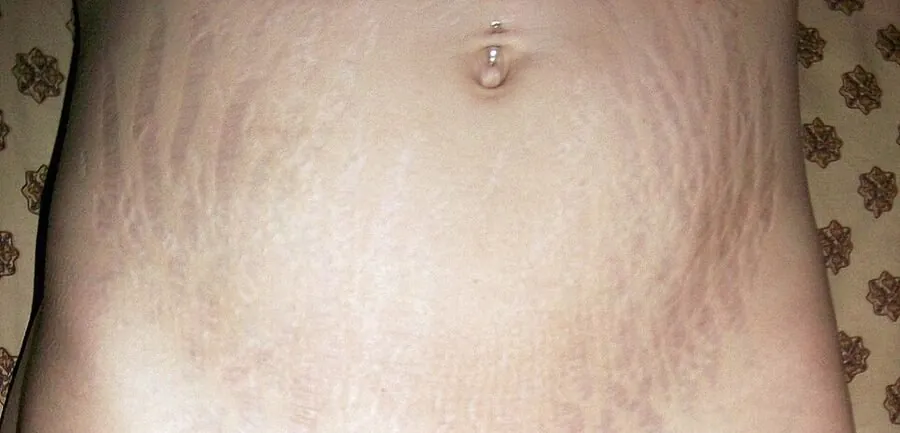
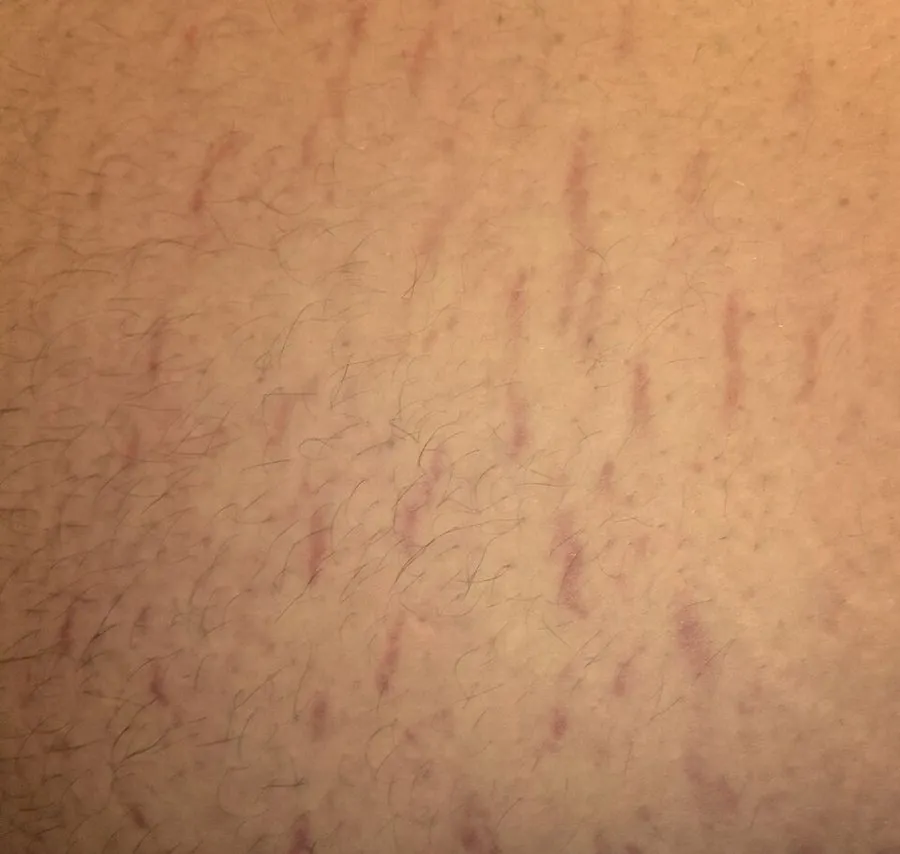
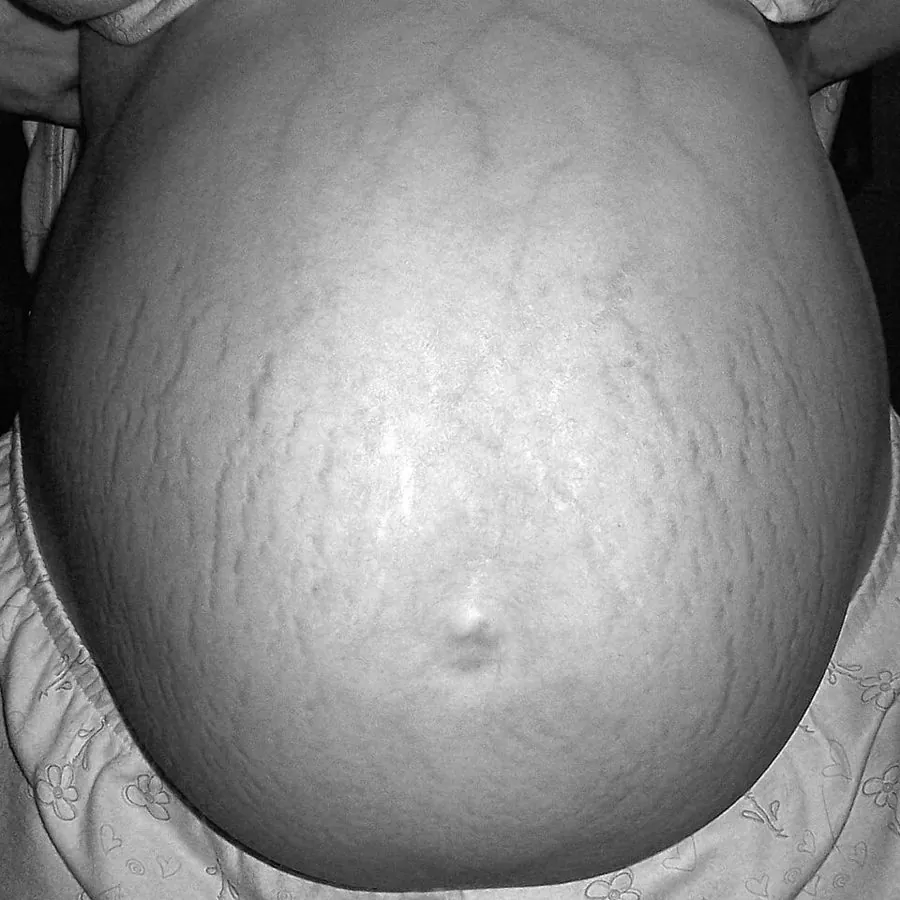
Why does pregnancy cause stretch marks?
The reviews of striae gravidarum describe a two-factor mechanism: mechanical stretch as the abdomen and breasts expand, on skin whose collagen and elastin architecture has been loosened by pregnancy's hormonal state [1]. That second factor is why marks appear in genetically susceptible women even with modest bumps, and why sisters and mothers often share the pattern. Risk concentrates in the third trimester; younger maternal age and higher weight gain raise it. None of it is negligence — the strongest predictor in the literature is family history, and no one moisturises their genome.
The colour clock: rubrae vs albae
Fresh postpartum marks are red-to-purple — striae rubrae — still vascular, still biologically active, and the stage at which treatment evidence is strongest. Over months to a couple of years they mature into striae albae: pale, silvery, slightly creased scars whose vascularity has gone and whose repair is slower work. The practical message for a postpartum mother is gentle but real: the red window is the responsive window, and 'wait and see if they fade' spends it. They do fade in colour — from red to white — but white is not gone; it is settled.
What actually works — and when
Prevention first, honestly: systematic reviews find most marketed anti-stretch-mark creams unsupported — evidence for prevention is weak overall, with only modest signals for a few massage-based regimens [1,2]. Treatment is where evidence lives: energy-based collagen remodelling — fractional lasers and microneedling-based approaches — improves the texture and appearance of striae, more readily in the rubrae stage, meaningfully but more slowly in albae. This is the pathway of the stretch mark treatment programme, and the general biology of striae is covered under stretch marks. Timing is planned like everything postpartum: around breastfeeding, recovery and realistic scheduling — and where the tummy's concern is laxity or separation rather than skin marking, the diastasis guide and sagging tummy programme pick up that thread.
What doesn't work for post-pregnancy stretch marks?
Guilt — the literature says genetics and hormones wrote most of it. Miracle oils promising erasure — no topical rebuilds torn dermis. Scrubbing — friction on stretched postpartum skin achieves irritation. Waiting years for white marks to vanish — colour fades; the texture stays without treatment. And any clinic promising complete removal — striae are dermal scars, and the honest endpoint is substantial improvement, not unmarked skin.
“Stretch marks fade from red to white on their own — but white is not gone, it is settled, and the red window is when treatment works hardest.”
— Dr Sin Yong
Dr Sin Yong’s Viewpoint
The first thing I tell postpartum mothers is that the creams could not have prevented most of it — genetics and hormones wrote the outcome, and guilt has no place in this consult. The second thing is about the colour clock: red marks are the responsive window, and 'waiting to see if they fade' quietly spends it.
Prefer Not to Use WhatsApp?
Use the short enquiry form instead →
Leave your name, mobile number and email and the clinic will contact you directly. No obligation.
Prefer a preliminary view first? You can also WhatsApp a photo of the area for Dr Sin Yong to review before you decide on a visit.