Conditions · Face · Surface Quality

Uneven Texture & Enlarged Pores

Medically reviewed by Dr Sin Yong · Last reviewed · 9 min read · Assessed personally by Dr Sin Yong · Jump to questions

Texture is structural. Pore size is set by sebaceous output and the collagen scaffold around each follicle; roughness by micro-scarring and disordered collagen. Skincare polishes the surface — changing the structure needs energy delivered into the dermis.

WhatsApp Dr Sin Yong →
Invited by Device Makers to Share His Expertise
International KOL for 14+ device brandsShared his clinical expertise with 500+ doctors across AsiaMBBS (NUS) · MRCS (Edinburgh) · MSc with Distinction (Queen Mary, London) · MSc (Cardiff)Every assessment personally by Dr Sin Yong

Uneven skin texture and large pores are structural: pore size is set by sebum output and the collagen around each follicle, and roughness by micro-scarring, photodamage and disordered collagen. Skincare works on the surface; changing the structure needs energy delivered into the dermis, so assessment separates texture, scarring and pigment before a device is chosen.

Also called: enlarged pores, open pores, 毛孔粗大

In brief
  • A pore is the visible opening of a pilosebaceous unit; it has no muscle and cannot open or close.
  • Pores look larger when sebum stretches the opening and when weakening collagen around the follicle lets it slump.
  • No treatment shrinks a pore to invisibility; the honest aim is refinement, not erasure.
Key takeaways
  • A pore is the visible opening of a pilosebaceous unit; it has no muscle and cannot open or close.
  • Pores look larger when sebum stretches the opening and when weakening collagen around the follicle lets it slump.
  • Roughness comes from micro-scarring, cumulative sun damage and disordered collagen, which scatter light.
  • Skincare works on the surface; changing structure needs energy delivered into the dermis, chosen after separating texture, scarring and pigment.
  • No treatment shrinks a pore to invisibility; the honest aim is refinement, not erasure.

Key Facts

What a pore is
The visible opening of a pilosebaceous unit — not a valve, it cannot open or close
Two size drivers
Sebum output stretching the opening; weakening perifollicular collagen letting it slump
Texture drivers
Micro-scarring, cumulative photodamage, disordered collagen
Fractional principle
Micro-columns of controlled injury triggering collagen renewal
Remodelling window
Collagen response builds over 4–12 weeks after fractional treatment
Honest limit
Nothing permanently shrinks a pore — refinement, not erasure
Who assesses this
An aesthetic physician separating texture, scarring and pigment
Typical first step
The fingertip test in clinic — what you feel vs what you see decides the device

What do enlarged pores look like?
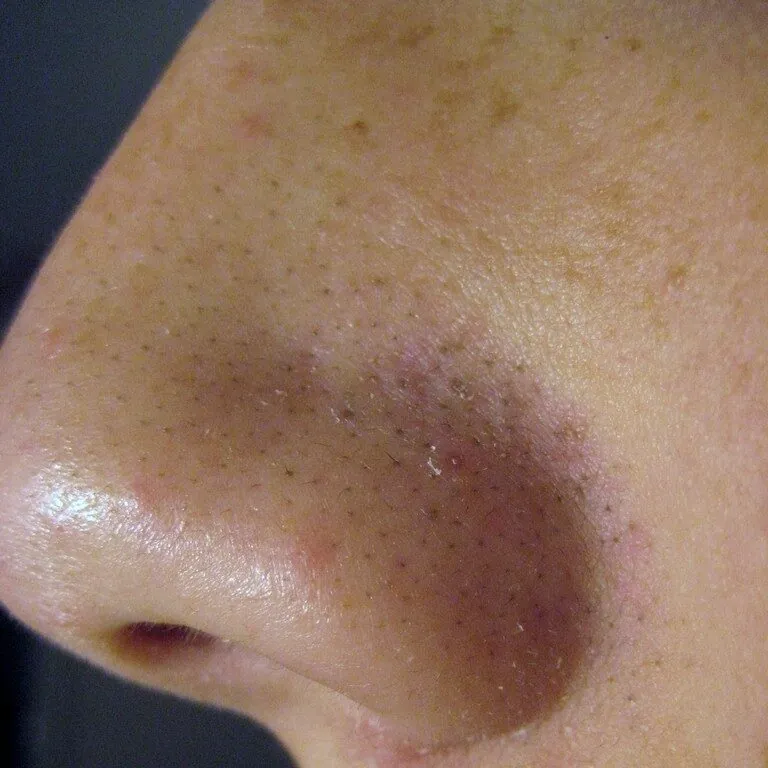

Enlarged, congested pores and blackheads over the nose
Enlarged, congested pores and blackheads over the nose. Image: Elecbullet, via Wikimedia Commons (Public domain).
A woman with hydrated skin touching her cheek in soft light
Skin quality is assessed separately from volume and laxity.

Why do pores enlarge and texture roughen?

Each pore is the opening of a pilosebaceous unit. Two things make it look larger: sebum production physically distending the opening, and age- or sun-weakened collagen around the follicle letting the opening slump into an oval. Surface roughness compounds it — old acne micro-scars, photodamage and irregular collagen scatter light instead of reflecting it, which is what the eye reads as “dull, uneven skin”. None of these are dirt; a pore is not something you can scrub open or steam closed.

What actually works for texture and pores?

Structure responds to structural treatment. Fractional lasers create controlled micro-columns of injury that trigger collagen renewal in the surrounding skin — evidence reviewed across fractional CO2 and radiofrequency microneedling platforms shows measurable improvement in atrophic texture [1], and picosecond fractional systems achieve remodelling with less downtime, with randomised data in Asian skin specifically [2] — relevant in Singapore, where post-inflammatory pigmentation risk shapes device choice. Dr Sin Yong's FSX Flawless Smooth Skin protocol and R2 Glow work this axis; oil-driven pores also need the sebum side managed via the acne programme.

What doesn't work for texture and pores?

Pore strips remove oxidised sebum plugs — the pore refills within days. “Pore-minimising” toners tighten the surface transiently. Steam neither opens nor closes anything, because pores have no muscles. And no treatment, at any price, permanently shrinks a pore to invisibility: the honest goal is refinement — smaller-looking, light-reflecting, consistent skin — maintained over time.

Texture, scars, or pigment? Sorting the surface complaints

Run a fingertip across the area with eyes closed. If you feel irregularity, it is texture or scarring — see the acne scar programme for depressed scars. If skin feels smooth but looks patchy, the problem is pigment — see which brown is yours. The distinction decides the device.

“Nothing shrinks a pore. Refinement is real; erasure is a marketing claim.”

— Dr Sin Yong

Dr Sin Yong’s Viewpoint

Nothing shrinks a pore, and I tell patients this in the first five minutes. What we can honestly do is make pores look refined and skin reflect light evenly — which is what people actually want when they say 'smaller pores'. I would rather set an honest target and hit it than promise the impossible and manage disappointment.

Prefer Not to Use WhatsApp?

Use the short enquiry form instead →

Leave your name, mobile number and email and the clinic will contact you directly. No obligation.

Your details are delivered directly to Dr Sin Yong's clinic team.

Thank you — your enquiry has been received. The clinic will contact you during opening hours (Mon–Fri 10am–8pm, Sat 11am–3pm).

Prefer a preliminary view first? You can also WhatsApp a photo of the area for Dr Sin Yong to review before you decide on a visit.

Which type do you have?

Types of texture and pore concern and look-alikes
Type / look-alikeHow to recognise itWhat it needsWhat does not work
Oily, enlarged pores (sebum-driven)Visible open pores over nose and cheeks, shiny, oily skinSebum control alongside structural treatment where suitablePore strips, which only remove plugs that refill
Pores from weak collagenOval, slumped pore openings with age or sun damageCollagen renewal through fractional or microneedling energyToners that tighten the surface only briefly
Texture from micro-scarring (old acne)Roughness you can feel with a fingertip after old acneFractional resurfacing, planned for the skin typeHome microneedling as a substitute for planned treatment
Photodamage roughness (sun-related dullness)Dull, uneven skin with fine lines in sun-exposed areasCollagen remodelling and daily sun protectionScrubs and exfoliants that irritate the skin
Pigment, not texture (look-alike)Smooth to touch but patchy in colourAssessment of the type of pigment before choosing a deviceTexture treatments for a colour problem

What does not work, and why

When to see a doctor

Myths we hear in clinic

“Steam opens pores and cold water closes them.”

Pores have no muscles, so they cannot open or close with temperature.

“Pore strips shrink pores over time.”

They remove oxidised sebum plugs only, and the pore refills within days.

Questions Patients Actually Ask

Why are my pores bigger than they used to be?+

Two reasons compound with age: sebum keeps stretching the opening while the collagen ring around it weakens. The pore has not multiplied — its frame has relaxed.

Do pores open with steam and close with cold water?+

No. Pores have no muscle and cannot open or close. Temperature changes blood flow and sebum viscosity, which briefly changes appearance.

Can lasers really improve texture, or is it hype?+

Fractional resurfacing has some of the strongest evidence in aesthetic dermatology, including systematic reviews and randomised trials. What it cannot do is make skin poreless.

Is microneedling at home worth it?+

Home rollers reach fractions of a millimetre and carry infection risk with reuse. The remodelling evidence comes from medical-depth, sterile, single-use systems.

Why does my makeup sit in my pores?+

Product settles into any opening larger than the surrounding surface is smooth. As texture evens out, product sits on skin rather than in it.

How many treatments does texture take?+

Collagen remodelling is biological, not instant — responses build over weeks and vary by skin. Dr Sin Yong sets the plan at assessment rather than quoting a universal number.

What causes large pores and uneven skin texture?+
Sebum production stretches the pore opening, while age and sun weaken the collagen around the follicle so it slumps into an oval. Roughness adds to this through old acne micro-scars, photodamage and irregular collagen, which scatter light and make skin look dull. Pores are not dirt and cannot be scrubbed open or steamed closed.
Can large pores be fully removed or closed?+
No. Pores are a normal part of skin and no treatment shrinks them to invisibility. What can improve is how refined they look, how evenly skin reflects light and how smooth the surface feels, through collagen renewal and sebum control. Dr Sin Yong sets an honest target at consultation before any device is chosen.
Which treatment suits uneven texture and large pores?+
It depends on whether the problem is oil-driven pores, weakened collagen, micro-scarring, photodamage or pigment, and on your skin colour and tolerance of healing. A fingertip test and assessment separate these. Fractional and radiofrequency energy renew collagen, while oil-driven pores also need sebum managed. Dr Sin Yong explains the options at consultation.
How much does skin texture and pore treatment cost in Singapore?+
The fee depends on the cause found at assessment, the area treated, the device and settings chosen, the number of passes or zones, and whether treatments are combined. Dr Sin Yong examines your skin, explains the options including skincare alone, and gives a written quote at consultation. A figure cannot responsibly be given beforehand.

References

  1. Comparative Efficacy and Safety of Fractional CO2 Laser and Microneedling Radiofrequency for Atrophic Acne Scars: A Systematic Review — PMC.
  2. 1064-nm Picosecond vs 1927-nm Fractional Thulium Laser in Asian Patients: Randomized Split-Face Study — PMC.
  3. Fractional Picosecond Laser for Atrophic Acne Scars: A Meta-Analysis — Journal of Cosmetic Dermatology.

Medically reviewed by Dr Sin Yong, MBBS (NUS), MRCS (Edinburgh) · Last updated 7 October 2026 · Editorial policy

Related reading
Follow Dr Sin Yong
InstagramTikTokYouTubeThreadsXLinkedInFacebook
Printable patient guide (PDF): Skin boosters: what to know — medically reviewed by Dr Sin Yong.
Dr Sin Yong · Every assessment personally performed
WhatsApp Enquiry