Medically reviewed by Dr Sin Yong · Last reviewed · 13 min read · Assessed personally by Dr Sin Yong · Jump to questions
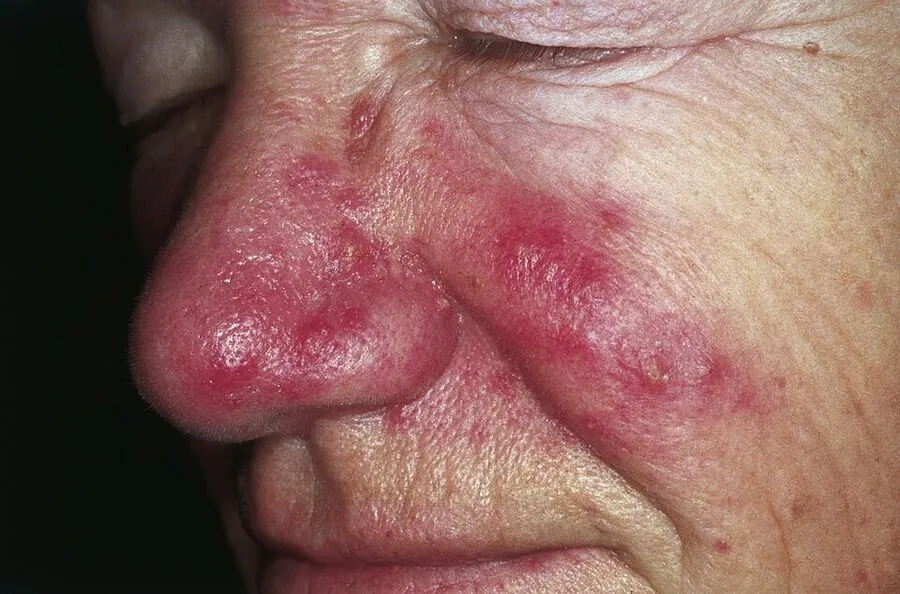
Rosacea is a chronic inflammatory condition of the central face: flushing that comes hard and lingers, background redness that stops fading, visible thread veins, and in some, acne-like bumps that aren't acne. It is routinely mislabelled 'sensitive skin' for years — and managed like a skin type instead of treated like the medical condition it is.
WhatsApp Dr Sin Yong →Rosacea is a chronic inflammatory condition of the central face, causing flushing, persistent redness, visible thread veins and sometimes acne-like bumps. It is a medical diagnosis rather than a skin type, and it differs from acne and perioral dermatitis, so Dr Sin Yong assesses each feature before choosing treatment.
Also called: facial flushing, 玫瑰痤疮, 酒渣鼻


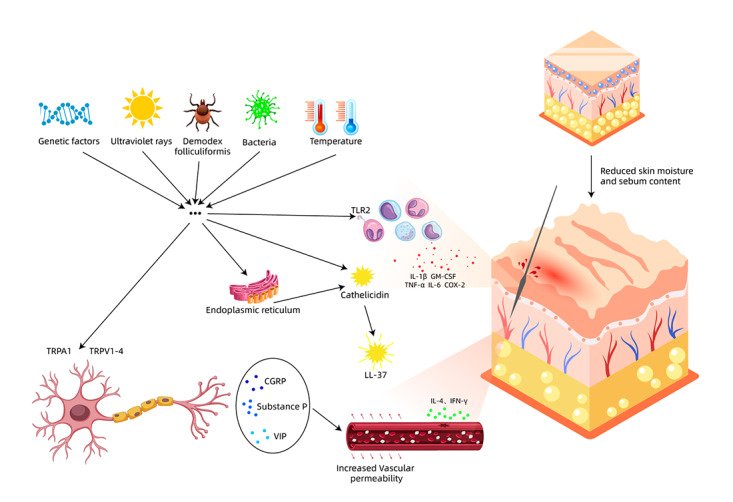
The global ROSacea COnsensus (ROSCO) panel reframed rosacea by phenotype: rather than rigid subtypes, each patient presents a personal mix of features — transient flushing, fixed centrofacial redness, telangiectasias, inflammatory papules, phymatous change and ocular signs — on a shared foundation of neurovascular dysregulation and innate-immune inflammation [1,2]. That framing matters practically: treatment is assembled feature by feature, not bought as one product for 'redness'. In Singapore, rosacea is chronically underdiagnosed in Asian skin, where erythema reads less obviously and years get lost to the 'sensitive skin' label.
The red flags that separate rosacea from garden-variety sensitivity: flushing that is intense, prolonged and triggered by heat, alcohol or emotion; redness that has become the face's resting state; visible thread veins; and stinging with products a normal barrier would shrug off. Acne-like bumps without comedones point to papulopustular rosacea rather than adult acne — a distinction with opposite treatment implications, since several acne staples aggravate rosacea. Flaky redness in the brows and nose creases is more likely seborrhoeic dermatitis. These separate on examination; they blur in a bathroom mirror.
The consensus recommendations map each phenotype to evidence: trigger management and barrier-respecting skincare as the floor; topical anti-inflammatory and vasoconstrictive agents for redness and papules; oral anti-inflammatory antibiotic regimens for stubborn inflammatory disease; and vascular laser or IPL specifically for the fixed redness and telangiectatic component — the feature creams reach least [1,2]. Skincare simplification is treatment, not advice: gentle cleanser, moisturiser, high-SPF sunscreen, nothing that stings. In-clinic, vessel-directed light work pairs with calm-skin programmes — laser toning and LDM ultrasound — chosen to soothe rather than provoke. Management is long-term; flare-and-remission is the disease's rhythm, and the plan is built for it.
Scrubs, acids and 'anti-redness' actives layered onto an inflamed barrier — rosacea skin needs less, not more. Steroid creams — they blanch redness briefly, then rebound it worse (and can create perioral dermatitis on top). Treating the bumps with acne benzoyl peroxide — a common irritant here. Chasing every trigger to zero — life with no sun, heat, coffee or feelings is not a treatment plan; managed exposure plus actual treatment is. And waiting — untreated rosacea tends to consolidate: transient flushing becomes fixed redness, and fixed redness grows vessels.
“Rosacea is a medical condition wearing a skincare label — and every year it spends filed under 'sensitive skin' is a year the redness consolidates.”
— Dr Sin Yong
In Singapore I see rosacea hiding behind years of 'sensitive skin' labels — especially in Asian skin, where the redness reads less loudly. Every year filed under sensitivity is a year the flushing consolidates into fixed redness and vessels. If skincare stings and your face flushes hard and long, ask the rosacea question. It changes everything downstream.
Use the short enquiry form instead →
Leave your name, mobile number and email and the clinic will contact you directly. No obligation.
Prefer a preliminary view first? You can also WhatsApp a photo of the area for Dr Sin Yong to review before you decide on a visit.
| Type / look-alike | How to recognise it | What it needs | What does not work |
|---|---|---|---|
| Rosacea | Flushing and persistent central redness, thread veins, bumps without blackheads | Assessment by feature: trigger review, gentle skincare, medical treatment, vessel-directed light | Scrubs, acids and steroid creams |
| Adult acne | Blackheads and whiteheads present, without a flushing background | Acne-directed treatment, confirmed on examination | Assuming it is rosacea, or stripping the barrier |
| Perioral dermatitis | Small bumps around mouth, nose or eyes with a clear rim at the lip | Stopping topical steroids, and medical review | Steroid creams, which worsen it |
| Seborrhoeic dermatitis | Flaky redness in the brows and nose creases | Diagnosis on examination, then treatment for the dermatitis | Treating it as rosacea or dryness |
| Sensitive skin | Stinging with products but no persistent redness or thread veins | Barrier-respecting routine and trigger review | Layering more actives onto stinging skin |
Sensitivity is one symptom of a chronic neurovascular and inflammatory condition that has evidence-based medical treatment.
Laser and IPL are directed at fixed redness and thread veins; they do not switch off the underlying condition, so they sit inside a management plan.
No — sensitivity is one symptom of a chronic neurovascular and inflammatory condition. The distinction matters because rosacea has evidence-based medical treatment; 'sensitive skin' has product aisles.
Yes, and it is underdiagnosed — the flushing and background redness are harder to see in deeper skin tones, so patients collect 'sensitive skin' labels for years before diagnosis.
Phymatous change — thickened, enlarged nasal skin — affects a minority, mostly men, over years of uncontrolled disease. Early treatment aims to avoid that trajectory.
Demodex mites and skin flora are found in higher numbers in rosacea and likely participate in the inflammation, but the foundation is the skin's own dysregulated immune and vascular response.
Anything that stings on application — typically exfoliating acids, retinoid overuse, fragranced products and alcohol-heavy toners. The working rule during flares: cleanser, moisturiser, sunscreen, nothing else without medical advice.
Laser and IPL are directed at the vascular component — fixed redness and thread veins — which creams reach least. They do not switch off the underlying condition, so they sit inside a management plan, not instead of one.
Medically reviewed by Dr Sin Yong, MBBS (NUS), MRCS (Edinburgh) · Last updated 7 October 2026 · Editorial policy
Dr Sin Yong maps rosacea feature by feature before choosing any treatment. Flushing, fixed redness, visible vessels, papules and pustules, thickened skin and eye symptoms are each noted, together with triggers, the current skincare routine and any steroid use. The inflammatory and vascular components are then planned separately, because they are addressed differently.
Medical management stays central. Topical agents such as azelaic acid, metronidazole or ivermectin, and oral treatment for more extensive inflammation, are prescribing decisions made after assessment and are named here for education only. Gritty or irritated eyes may be referred to an eye specialist.
Where redness is diffuse and the picture is mainly inflammatory, R2 Glow, a long-pulsed 755 nm and 1064 nm laser, is generally what he reaches for first. Established individual vessels are assessed as a separate target, and where textural change and background redness occur together, the 675 nm 少女光 Laser may be used. Because heat is itself a trigger, parameters are kept conservative, and laser sits inside the medical plan rather than replacing it.
| Condition | How it looks | Common triggers | What tends to help | What tends to worsen it |
|---|---|---|---|---|
| Rosacea | Central-face flushing and persistent redness, visible thread veins, and in some, papules and pustules without blackheads or whiteheads; the skin around the eyes is usually spared | Heat, sun, alcohol, spicy food, hot drinks, stress and some skincare actives | Trigger management, barrier-respecting skincare and sunscreen, prescribed topical or oral anti-inflammatory treatment, and vascular laser or IPL for fixed redness | Steroid creams, scrubs and acids, and acne products such as benzoyl peroxide |
| Acne | Blackheads and whiteheads (comedones) with inflamed papules, pustules and sometimes nodules on the face, chest or back, without a flushing background | Hormonal shifts, heavy or pore-blocking products, picking, and some medicines | Prescribed treatment matched to severity, such as topical retinoids, benzoyl peroxide or oral options, with non-comedogenic skincare | Picking and squeezing, heavy occlusive products, and stopping treatment early |
| Perioral dermatitis | Clusters of small red papules and pustules around the mouth, sometimes the nose and eyes, sparing a narrow rim along the lip border | Topical steroid creams, heavy moisturisers and occlusive cosmetics; fluorinated toothpaste is reported in some people | Stopping the steroid with medical support, a radically simplified routine, then prescribed topical or oral anti-inflammatory treatment | Continuing or strengthening steroid creams, and layering new products onto the rash |
| Demodex overgrowth (demodicosis) | Itch, burning and fine, rough follicular scale with acne-like bumps, often on the cheeks, nose and eyelids, sometimes one-sided | Long-term facial steroid use, heavy oil-based cosmetics, a disturbed skin barrier and reduced local immunity; the mites themselves are normal in low numbers | Prescribed topical agents with activity against mites, such as ivermectin, and a simpler routine; eyelid involvement is managed with an eye specialist | Steroid creams, harsh scrubbing, neat tea tree oil and home remedies sold as mite killers |