Medically reviewed by Dr Sin Yong · Last reviewed · 9 min read · Assessed personally by Dr Sin Yong · Jump to questions
Purified DNA fragments, usually from salmon, used in injectable and topical products to support skin repair and hydration.
WhatsApp Dr Sin Yong →A PDRN skin booster is an injectable of purified DNA fragments, usually from salmon, placed into the dermis to support how the skin repairs itself. PDRN refers to shorter fragments and PN, polynucleotide, to longer chains, and products built on each differ. Neither adds volume or lifts. A fish or salmon allergy is checked first.
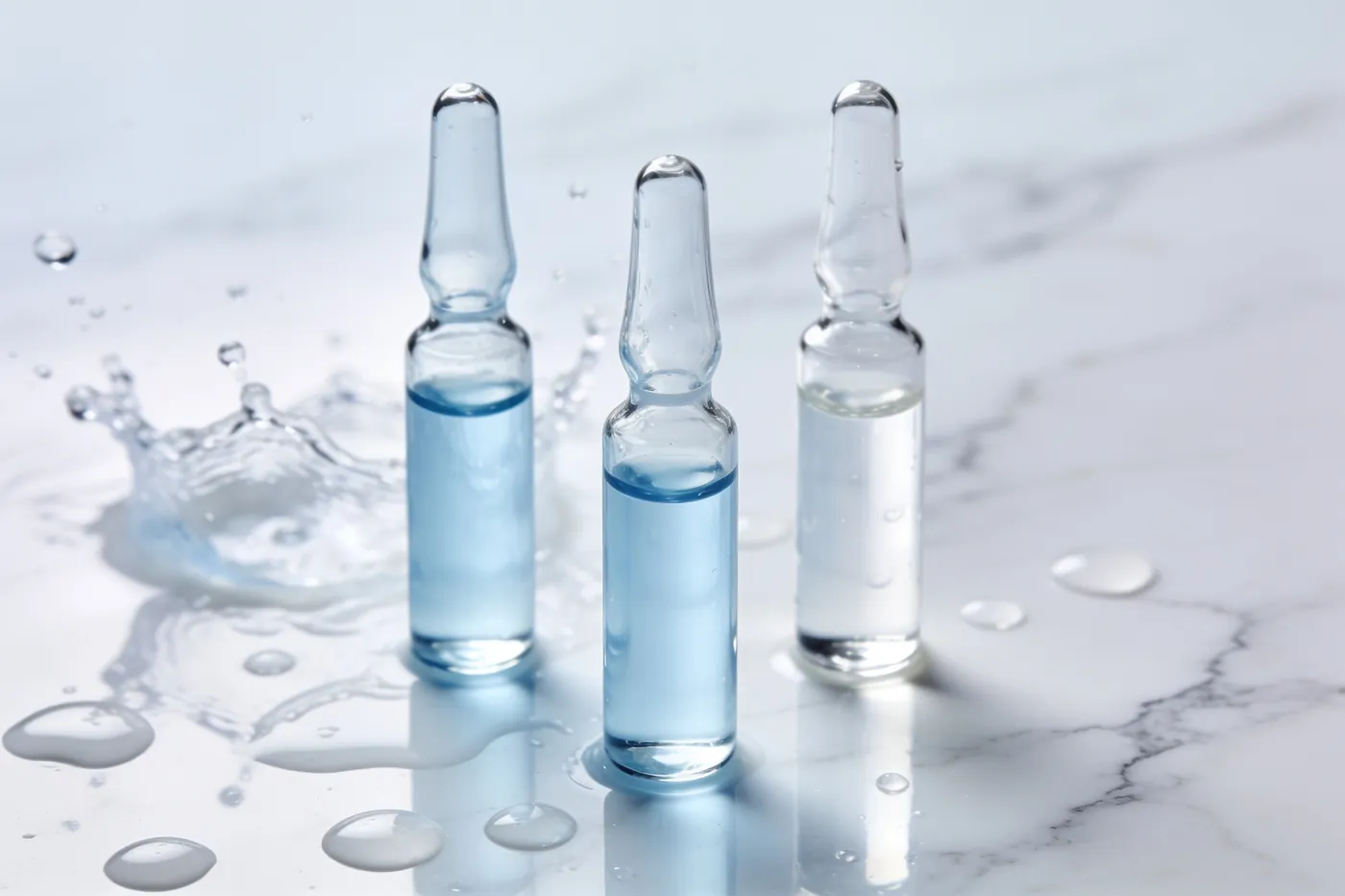
PDRN and polynucleotides are chains of DNA fragments extracted and purified, usually from salmon or trout. PDRN consists of shorter fragments; polynucleotides are longer chains that form a viscous gel. They are thought to work in two ways: by activating adenosine A2A receptors, which reduces inflammation and supports tissue repair, and by supplying nucleotides that cells can reuse for renewal. The long chains also bind water, adding hydration. In aesthetic medicine they are mainly injected into the skin as skin boosters for texture, fine lines, thin skin under the eyes and acne scars. Topical products exist, but penetration of large molecules through intact skin is limited. [1]
“Evidence for topical PDRN is weaker than for injectable use, and results reported with one brand may not apply to another.”
Dr Sin YongOn the evidence for polynucleotides
Reviews describe consistent laboratory and animal evidence for anti-inflammatory and repair effects, and wound-healing studies support PDRN in tissue repair. A systematic review of polynucleotides in aesthetic medicine found improvements in skin quality, scars and periorbital rejuvenation, but noted small sample sizes, short follow-up and few controlled trials. Evidence for topical PDRN is weaker than for injectable use, and results reported with one brand may not apply to another.
People with fish or salmon allergy should avoid these products. Injectable polynucleotides are not used over active infection, inflammation or in pregnancy, and anyone with an autoimmune condition or bleeding tendency should discuss it with the doctor first. Injection causes temporary bumps, redness and possible bruising. Topical products occasionally cause irritation.
Topical PDRN and polynucleotide skincare is sold in Singapore as cosmetic products. Injectable polynucleotide products are regulated health products that should be administered by doctors in a clinical setting. Status depends on the product, so check with a doctor before choosing any injectable treatment.
If a dark patch, breakout or irritation is not responding to what you are using, the next step is a diagnosis rather than another product. See the Skin A–Z library for related ingredients.
Use the short enquiry form instead →
Leave your name, mobile number and email and the clinic will contact you directly. No obligation.
Prefer a preliminary view first? You can also WhatsApp a photo of the area for Dr Sin Yong to review before you decide on a visit.
Purified DNA fragments, usually from salmon, used in injectable and topical products to support skin repair and hydration.
People with fish or salmon allergy should avoid these products. Injectable polynucleotides are not used over active infection, inflammation or in pregnancy, and anyone with an autoimmune condition or bleeding tendency should discuss it with the doctor first. Injection causes temporary bumps, redness and possible bruising. Topical products occasionally cause irritation.
It is commonly paired with Hyaluronic acid skin boosters, ceramides, sunscreen; often combined with laser or microneedling plans; introduce one new active at a time and stop if irritation develops.
Medically reviewed by Dr Sin Yong, MBBS (NUS), MRCS (Edinburgh) · Last updated 7 September 2026 · Editorial policy
PN and PDRN come from the same source but differ in chain length. PN, polynucleotide, is made of longer DNA chains that form a viscous gel; PDRN, polydeoxyribonucleotide, is made of shorter fragments. A 2025 review comparing the two attributes extracellular matrix remodelling mainly to the longer PN chains, and adenosine receptor activation mainly to the shorter PDRN fragments.
The terms are often used interchangeably in marketing, so a 'PDRN skin booster', a 'PN healer' and a 'salmon DNA injection' may or may not describe the same product. Products differ in concentration, viscosity and intended use, and results reported for one may not apply to another. Rejuran, a PN product registered with Singapore's Health Sciences Authority as an injectable medical device, is the polynucleotide booster used at this practice. Plinest is another polynucleotide brand, from a different manufacturer, used by some clinics.
Whichever is offered, it is reasonable to ask which material and which product it is, and to have it recorded in your notes. Both are fish-derived, so a fish or salmon allergy is raised before either is considered. The polynucleotide skin booster article on this site sets out how PN compares with hyaluronic acid boosters and collagen biostimulators.
| Option | What it does | What it cannot do | Typical recovery | Who it tends to suit |
|---|---|---|---|---|
| Injectable PN (polynucleotide), such as Rejuran, the product used at this practice | Places longer-chain polynucleotide into the dermis by micro-injection, directed at the repair environment of the skin | Add volume, lift or remove pigment | Small raised points at the injection sites, redness and possible bruising that settle | Texture, fine lines, crepey under-eye skin or post-acne skin quality, in people without a fish allergy |
| Injectable PDRN preparations (other brands) | Places shorter DNA fragments into the dermis; their action is described mainly through adenosine A2A receptor signalling | Add volume or lift; findings reported with one product do not transfer to another | Similar injection-point redness, bumps and bruising that settle | Skin-quality complaints, with suitability depending on the specific product |
| Hyaluronic acid skin booster, including Profhilo | Places a water-binding molecule into the dermis for hydration; Profhilo is also designed to stimulate | Deliver a repair signal in the way polynucleotides are described to, or build structure | Small bumps at the injection points that settle | Dry, dehydrated skin or loss of skin bounce |
| Collagen biostimulator (PLLA, PCL or PDLLA) | Acts as a resorbable scaffold that fibroblasts respond to with new collagen over weeks and months | Treat surface texture on its own; PLLA and PCL cannot be dissolved | Swelling, tenderness and possible bruising that settle | Diffuse volume loss and loss of firmness |
| Topical PDRN or polynucleotide skincare | A cosmetic product applied to the skin surface | Reach the dermis as an injection does; large molecules penetrate intact skin poorly and the evidence is weaker | Usually none; occasional irritation | Anyone wanting a skincare step, with realistic expectations of what a topical can do |
Topical PDRN and polynucleotide serums are cosmetic ingredients in Singapore, notified to the HSA under the Health Products Act with no concentration limit in the ASEAN Cosmetic Directive annexes. Injectable polynucleotides are a different category: these are regulated by the HSA as medical devices, registered before supply and administered only by a doctor. A salon 'PDRN facial' applies a serum to the surface; it is not an injection. A doctor assesses the skin and explains which route, if any, is appropriate before anything is injected. Source.