Ultherapy vs Thermage: focused ultrasound or radiofrequency
Medically reviewed by Dr Sin Yong · Last reviewed · 8 min read
Published 9 October 2026 · Reviewed by Dr Sin Yong
Ultherapy and Thermage are the two most widely discussed non-surgical tightening treatments, and they work in different ways. Ultherapy focuses ultrasound energy into small points at set depths, down to the muscle-and-fascia layer, while watching on an ultrasound image. Thermage heats the deeper dermis in bulk with monopolar radiofrequency. Two randomised trials have compared them directly.
Short answerUltherapy uses microfocused ultrasound with visualisation to heat points at about 1.5, 3.0 and 4.5 mm; Thermage uses monopolar radiofrequency at 6.78 MHz to heat the dermis broadly. In two small randomised split-face or comparative trials, both improved laxity with no significant difference between them; in one, ultrasound was more painful. Which suits you depends on where the laxity sits and how much facial fat you have.
Two randomised trials of 20 patients each: no significant difference in laxity improvement (Alhaddad 2019; Jones 2017)
Comfort
Ultrasound was more painful in the neck trial (Jones 2017); MFU-V mean pain 4.85/10 across 42 studies (Amiri 2025)
FDA wording
Ultherapy: brow lift, submental and neck lift, décolleté lines, skin laxity on abdomen, arms and knees. Thermage FLX: wrinkles, including periorbital
Lean faces
Heat placed into fat that is not the target can hollow a lean face — a reason Dr Sin Yong does not prefer HIFU-type treatments for lean patients
Ultherapy and Thermage FLX compared
Ultherapy
Thermage FLX
Energy
Microfocused ultrasound with real-time imaging
Monopolar radiofrequency, 6.78 MHz
How heat is placed
Points at set depths: about 4.5, 3.0 and 1.5 mm
Broad heating of the deeper dermis and septa
Imaging
Yes, ultrasound visualisation to 8 mm
No
Cooling
None needed for focused points
Cryogen spray
FDA wording
Lift the eyebrow; lift lax submental and neck tissue; décolleté lines; skin laxity on abdomen, arms and knees
Non-invasive treatment of wrinkles and rhytids, including periorbital
Head-to-head evidence
Comparable to monopolar RF in two small randomised trials
Comparable to MFU-V in two small randomised trials
What is the actual difference?
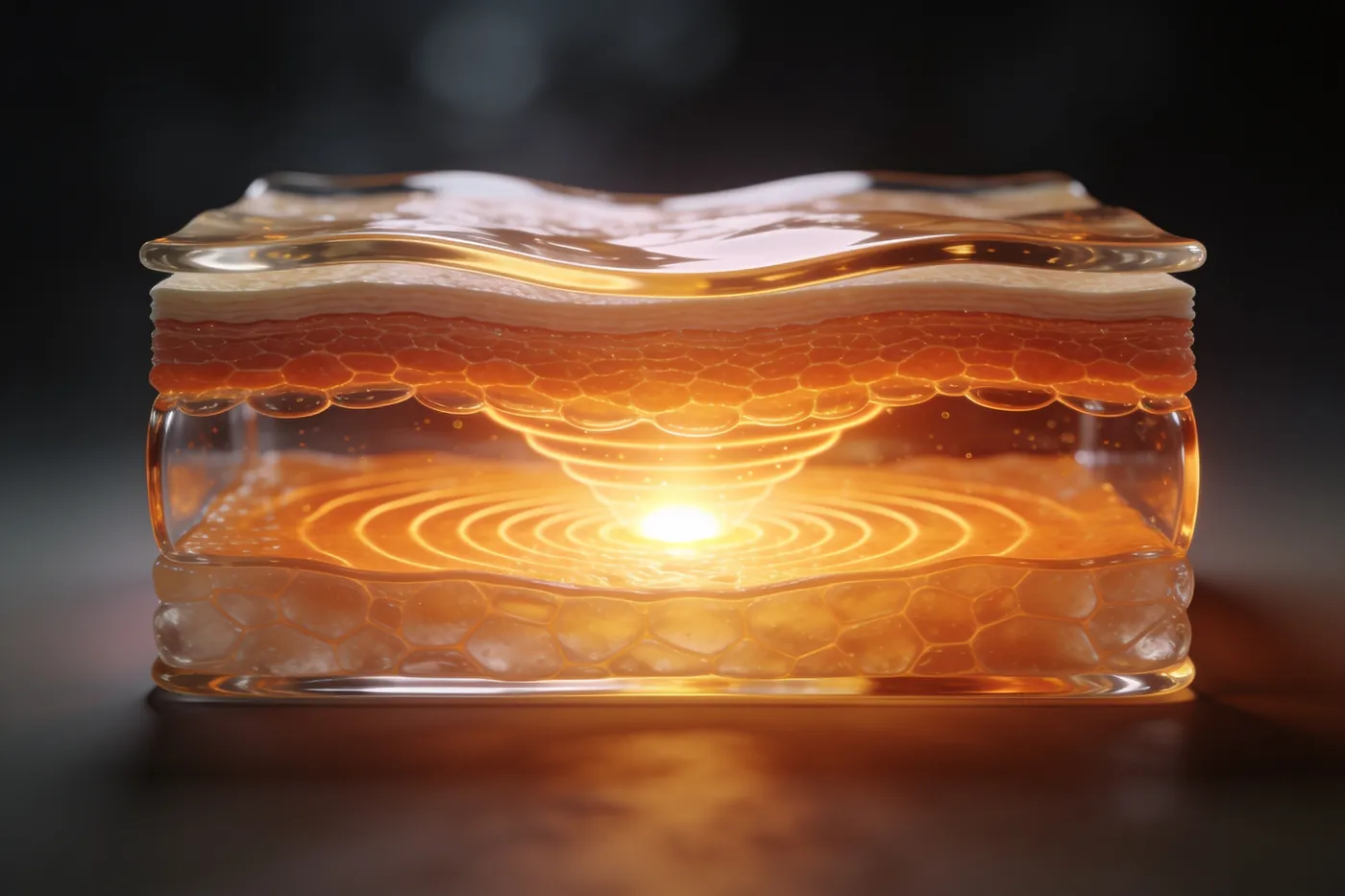
Ultherapy focuses ultrasound energy into tiny points beneath the skin, the way a magnifying glass focuses light, at depths chosen by the transducer: about 4.5 mm for the muscle-and-fascia layer, 3.0 mm for the deep dermis and 1.5 mm for the superficial dermis. An image on screen helps the operator see the layers. Thermage passes radiofrequency current through the skin to a return pad, heating the deeper dermis and its fibrous septa broadly while cryogen cools the surface. Focused points against a broad field is the core distinction.
Focused ultrasound places heat in points at set depths; monopolar radiofrequency heats the dermis broadly.
What do head-to-head trials show?
In a randomised split-face trial of 20 patients followed for six months, monopolar radiofrequency and microfocused ultrasound both improved laxity with no significant difference between them (Alhaddad, Dermatol Surg 2019). In a trial of 20 patients treated on the neck, results were again not significantly different, and ultrasound was more painful (Jones, Dermatol Surg 2017). Across 42 studies of microfocused ultrasound, 89% reported investigator-assessed improvement, with mean pain of 4.85 out of 10 (Amiri, Aesthet Surg J 2025); in an earlier lower-face study, outcomes were weaker in patients with a body-mass index above 30 (Oni, Aesthet Surg J 2014).
Where the laxity sits, and how much facial fat there is, decide the tool.
Who suits which?
Where laxity sits deeper, along the jawline and under the chin, focused ultrasound reaches the deeper layer directly. Where the concern is skin quality and fine crêpiness, broad dermal heating is often the better fit. In lean or hollow faces, heat placed into fat that is not the target can make the face look more hollow; hollowing after Ultherapy, HIFU or Thermage is a recognised risk, which is why Dr Sin Yong does not prefer HIFU-type treatments for lean patients and uses the VF Lift – Vertical Facelift on Volnewmer instead. For puffier or heavier faces, he generally uses Time Freeze Laser LCLR®. His fuller comparison is on Ultherapy vs VF Lift vs Time Freeze.
“The question is not ultrasound or radiofrequency. It is where the laxity sits, and how much fat the face can afford to lose.”
Neither has been shown to be better overall. Two small randomised trials comparing microfocused ultrasound with monopolar radiofrequency found no significant difference in laxity improvement; in one, ultrasound was more painful.
In a neck trial, microfocused ultrasound was more painful than monopolar radiofrequency. Comfort varies with settings, area and the individual.
Hollowing after Ultherapy, HIFU or Thermage is a recognised risk, particularly in lean faces where heat reaches fat that is not the target. This is why the plan depends on how much facial fat you have.
He uses the VF Lift – Vertical Facelift on Volnewmer for lean or hollow faces and Time Freeze Laser LCLR® for puffier faces. Ultherapy and Thermage are compared here because patients ask about them.
References
US FDA 510(k) K260618 — Ulthera System (Merz), 2026: indicated to lift the eyebrow, lift lax submental and neck tissue, improve lines and wrinkles of the décolleté, and improve skin laxity on the abdomen, arms and knees. source
US FDA 510(k) summary K170758 — Thermage FLX (Solta Medical), 2017: 6.78 MHz; indications include non-invasive treatment of wrinkles and periorbital wrinkles. source
Alhaddad M, et al. Randomised split-face comparison of monopolar radiofrequency and microfocused ultrasound with visualisation for laxity (n=20). Dermatol Surg. 2019;45(1):131-139. doi:10.1097/DSS.0000000000001653. source
Jones IT, et al. Subsurface monopolar radiofrequency versus microfocused ultrasound with visualisation for neck laxity (n=20). Dermatol Surg. 2017;43(12):1441-1447. doi:10.1097/DSS.0000000000001216. source
Amiri M, et al. Microfocused ultrasound with visualisation: a meta-analysis of 42 studies. Aesthet Surg J. 2025;45(3):NP86-NP94. doi:10.1093/asj/sjae228. source
Oni G, et al. Evaluation of microfocused ultrasound with visualisation for lower-face laxity (n=93 evaluated). Aesthet Surg J. 2014;34(7):1099-1110. doi:10.1177/1090820X14541956. source